By Steve Shelton
There is a particular kind of exhaustion that comes not from owning too much. The cluttered counter you navigate every morning, the closet you avoid opening, the to-do list that multiplies faster than you can cross things off — these small stresses accumulate quietly until they become the background noise of your daily life. Minimalism offers a way out, and it is far less drastic than most people assume.
At its core, minimalism is not about living with as little as possible. It is about being intentional with what you allow into your life, your home, and your schedule. When you strip away the excess, what remains tends to be exactly what matters. That clarity has a way of changing not just how your home looks but how you feel inside it.
For buyers and homeowners in Bar Harbor, ME, this philosophy resonates in a particular way. The natural beauty of the Maine coast already invites a quieter, more deliberate pace of living. Bringing minimalist principles into your home is simply an extension of what the landscape already asks of you.
Key Takeaways
- Minimalism is about intentionality, not deprivation, and it can be applied gradually rather than all at once.
- Decluttering with purpose is the foundation of a minimalist home and lifestyle.
- Thoughtful design choices, including furniture, color, and layout, reinforce a minimalist environment.
- Daily habits and routines are just as important as physical possessions when it comes to minimalist living.
- A minimalist approach can make your home more functional, more serene, and more comfortable.
Start With What You Already Own
Before you buy a single organizer bin or repaint a wall, the most effective first step in minimalist living is a thorough, honest assessment of what you already have. Most households carry years of accumulated items that no longer serve a purpose, hold meaning, or bring any particular happiness. They simply exist, taking up physical and mental space.
The process does not have to be overwhelming. Working room by room, category by category, gives you a manageable path through the process. The goal is not to gut your home but to make deliberate decisions about each item: does this have a clear function, do you genuinely love it, or is it simply here because no one has decided otherwise?
Letting go of the latter category is where the transformation begins. When the items that remain are the ones you have actively chosen to keep, the space around them immediately feels different. There is more room to breathe, more ease of movement, and a subtle but real sense of order that does not require constant maintenance.
The process does not have to be overwhelming. Working room by room, category by category, gives you a manageable path through the process. The goal is not to gut your home but to make deliberate decisions about each item: does this have a clear function, do you genuinely love it, or is it simply here because no one has decided otherwise?
Letting go of the latter category is where the transformation begins. When the items that remain are the ones you have actively chosen to keep, the space around them immediately feels different. There is more room to breathe, more ease of movement, and a subtle but real sense of order that does not require constant maintenance.
Questions to Ask Before You Keep Something
- Does this item have a clear and regular purpose in your current life?
- If you were buying it today, would you choose it again?
- Is the item here because you love it or because getting rid of it feels like too much effort?
- Would someone else get more value from it than you currently do?
- Does keeping it require time, space, or money you would rather spend elsewhere?
Design With Restraint
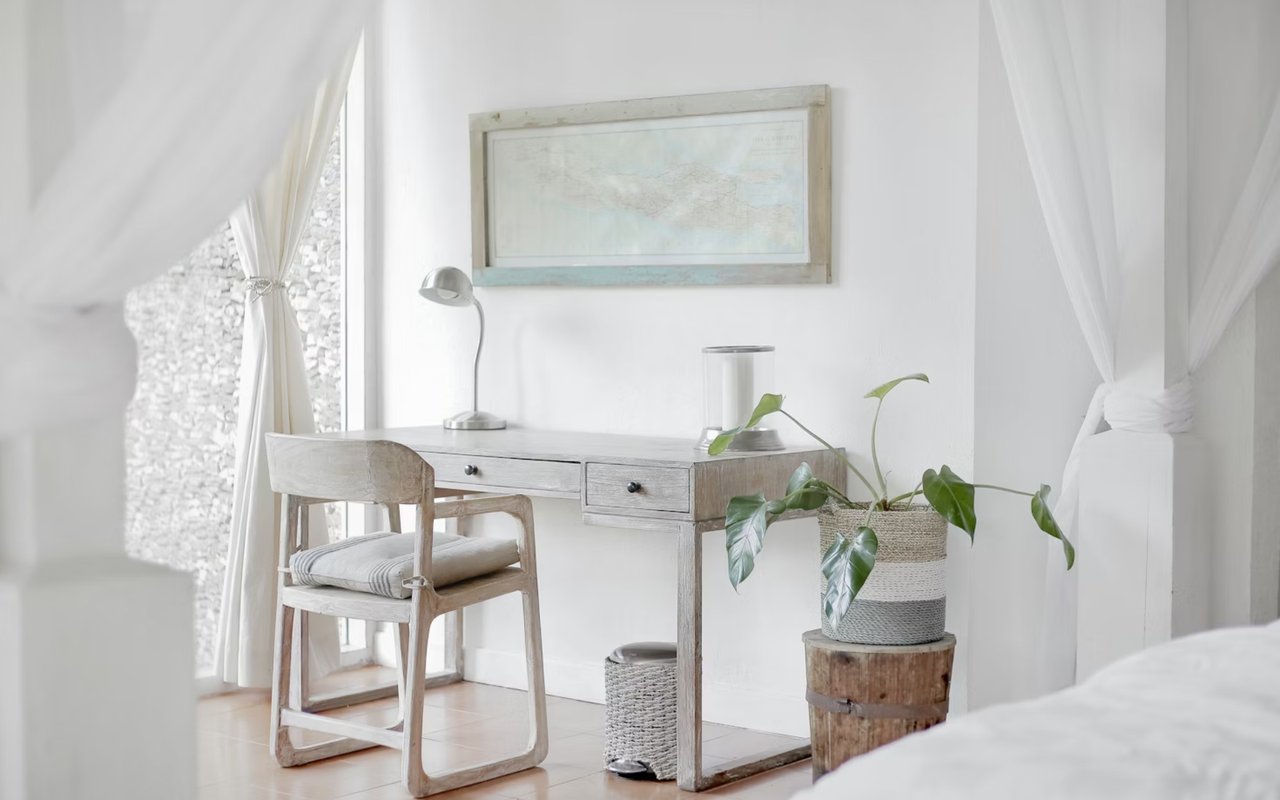
Once you have edited your possessions, the way you approach your interior design choices will naturally shift. Minimalist design is not cold or sterile; it is thoughtful. It prioritizes quality over quantity, open space over filled space, and cohesion over variety.
In practical terms, this means choosing furniture with clean lines and honest materials. A well-made wood dining table, a sofa in a neutral linen, a single piece of meaningful artwork on an otherwise bare wall — these choices do not require a large budget, but they do require patience and selectivity. The temptation to fill every surface, hang something on every wall, and add just one more accent piece is real, and resisting it is part of the practice.
Color plays a significant role as well. Minimalist interiors tend to lean on a restrained palette: whites, warm grays, soft greiges, and earthy tones that allow natural light to do the heavy lifting. In a Bar Harbor home, where the light off the water is unlike anywhere else, letting that light into your space and keeping the interior quiet enough to honor it is its own form of design intelligence.
In practical terms, this means choosing furniture with clean lines and honest materials. A well-made wood dining table, a sofa in a neutral linen, a single piece of meaningful artwork on an otherwise bare wall — these choices do not require a large budget, but they do require patience and selectivity. The temptation to fill every surface, hang something on every wall, and add just one more accent piece is real, and resisting it is part of the practice.
Color plays a significant role as well. Minimalist interiors tend to lean on a restrained palette: whites, warm grays, soft greiges, and earthy tones that allow natural light to do the heavy lifting. In a Bar Harbor home, where the light off the water is unlike anywhere else, letting that light into your space and keeping the interior quiet enough to honor it is its own form of design intelligence.
Principles of Minimalist Interior Design
- Stick to a palette of two or three complementary colors across a room.
- Choose furniture that serves multiple purposes where possible, such as a storage ottoman or a bed frame with built-in drawers.
- Leave deliberate negative space; not every corner needs to be furnished or filled.
- Display only the items you find genuinely meaningful, and rotate them occasionally rather than accumulating more.
- Invest in quality for the pieces you use most and hold off on the rest.
Build Minimalist Habits Into Your Routine
A minimalist home does not stay that way on its own. The physical environment is a reflection of the habits that shape it, which means that sustainable minimalism is as much about your daily rhythms as it is about your stuff.
Small rituals make a world of difference. Taking five minutes at the end of each day to return items to their proper place prevents the slow drift toward clutter. Applying a “one-in, one-out” rule whenever you bring something new into the house keeps accumulation in check without requiring periodic overhauls. Unsubscribing from marketing emails, pausing before impulse purchases, and keeping a short list of items you actually need are habits that protect the clarity you have worked to create.
Small rituals make a world of difference. Taking five minutes at the end of each day to return items to their proper place prevents the slow drift toward clutter. Applying a “one-in, one-out” rule whenever you bring something new into the house keeps accumulation in check without requiring periodic overhauls. Unsubscribing from marketing emails, pausing before impulse purchases, and keeping a short list of items you actually need are habits that protect the clarity you have worked to create.
Daily Habits That Support Minimalist Living
- Do a quick reset of your main living spaces each evening before you go to bed.
- Before buying anything, give yourself a 24-hour window to decide if you still want it.
- Schedule a quarterly review of your home to identify anything that has quietly outlived its usefulness.
- Keep a running donation box in a closet so that items can leave your home continuously rather than in stressful purges.
- Limit the number of ongoing commitments on your schedule the same way you limit the number of items on your shelves.
FAQs
Where Should I Start If My Home Feels Completely Overwhelming?
Start with one small, manageable area rather than attempting the whole house at once. A single junk drawer, a bathroom cabinet, or one section of a closet is enough to build momentum. The goal in the beginning is simply to prove to yourself that the process works and that letting go is easier than it seems.
Does Minimalism Mean I Have to Get Rid of Things I Love?
No. Minimalism is about removing what no longer serves you, not what genuinely matters to you. If something holds real meaning or brings real utility to your life, it belongs. The process is about clearing out the things you keep by default rather than by choice.
Can I Be a Minimalist Without Redecorating My Entire Home?
Yes. Minimalism begins with subtraction, not addition. You do not need to redecorate to start living more minimally; you need to identify what is no longer adding value and let it go. The aesthetic shifts tend to follow naturally once the excess has been cleared.
Bar Harbor Is Waiting
The coast of Maine has a way of clarifying what matters. The pace here, the quality of light, the particular stillness of a morning on the water — it all points toward the same lesson that minimalism teaches: less leaves more room for what is actually worth your attention.
Whether you are settling into a home here for the first time or have lived along the shoreline for years, incorporating minimalist principles into your daily life is one of the most meaningful investments you can make in how your home feels and functions.
When you are ready to find or sell a home in Bar Harbor that reflects this kind of intentional living, reach out to me, Steve Shelton.
Whether you are settling into a home here for the first time or have lived along the shoreline for years, incorporating minimalist principles into your daily life is one of the most meaningful investments you can make in how your home feels and functions.
When you are ready to find or sell a home in Bar Harbor that reflects this kind of intentional living, reach out to me, Steve Shelton.